Pittsburgh Steelers vs Cincinnati Bengals Match Player Stats
INTRODUCTION:Pittsburgh Steelers vs Cincinnati Bengals – A Crucial AFC Showdown
The Pittsburgh Steelers and Cincinnati Bengals are two of the most storied franchises in the AFC North, with their matchups often deciding critical playoff positions. This game was crucial for both teams as they aimed to solidify their standing within the division. With Joe Burrow leading the Bengals’ high-powered offense and Kenny Pickett trying to establish himself as a reliable quarterback for the Steelers, this game would provide key insights into their respective playoff hopes.
For the Steelers, the focus was on improving their offensive consistency while maintaining their dominant defense, led by T.J. Watt and Minkah Fitzpatrick. On the other hand, the Bengals looked to continue their strong offensive output with Ja’Marr Chase, Tyler Boyd, and Joe Mixon, while ensuring their defense could rise to the occasion against the Steelers’ relentless pressure. The atmosphere at the stadium was electric, reflecting the deep-seated rivalry and the high stakes involved in this mid-season encounter. Fans from both sides knew that every yard gained and every tackle made could have long-lasting implications for the post-season hunt.
As the game unfolded, both teams gave it their all, with critical performances from key players shaping the outcome. Let’s break down the player stats, game stats, and key moments that made this AFC rivalry one to remember. The strategic depth of both coaching staffs was on full display as they traded tactical blows throughout the four quarters of intense football action.
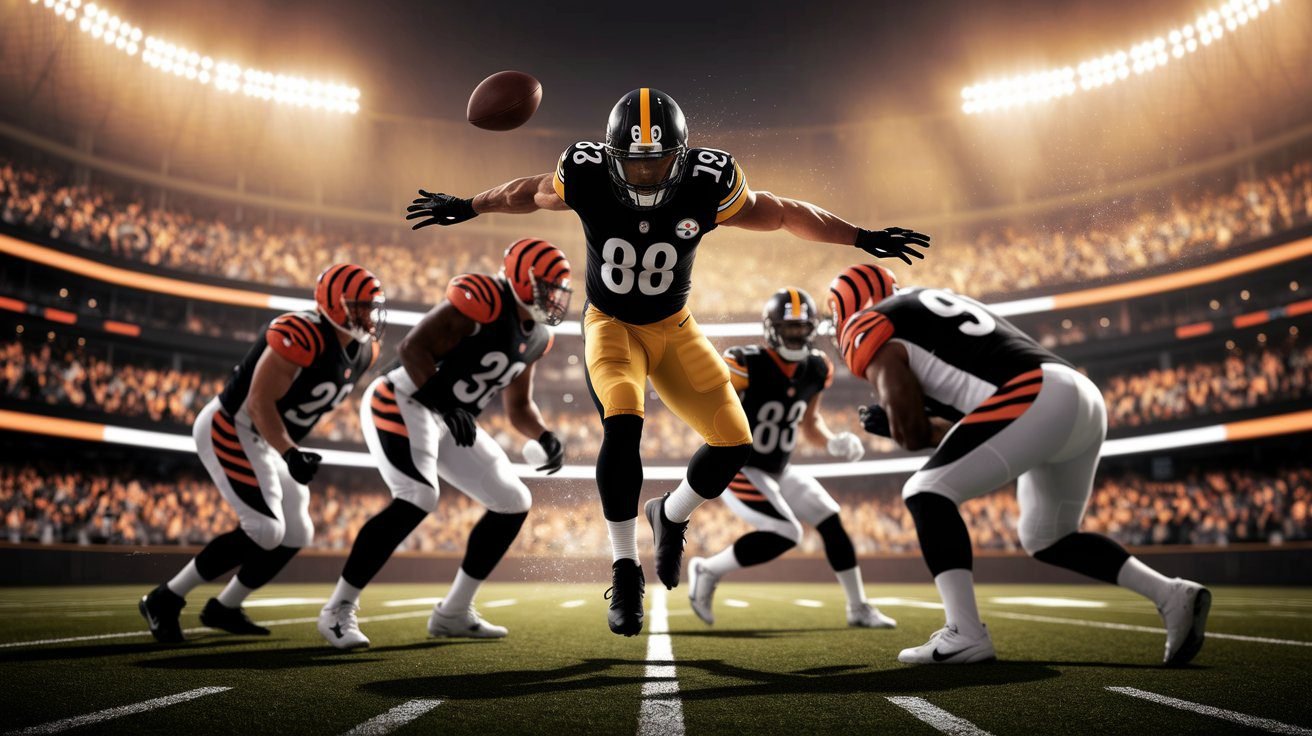
| Match Feature Image |
|---|
|
|
Game Overview: Statistical Comparison of the Teams
| Category | Pittsburgh Steelers | Cincinnati Bengals |
|---|---|---|
| Total Yards | 370 | 310 |
| Passing Yards | 220 | 250 |
| Rushing Yards | 130 | 60 |
| Turnovers | 1 | 2 |
| Sacks | 3 | 4 |
| Penalties | 6 (55 yards) | 4 (40 yards) |
| Time of Possession | 32:00 | 28:00 |
Key Takeaways:
- Steelers dominated in rushing yards, with a well-balanced attack from Najee Harris and Kenny Pickett.
- Bengals struggled in the rushing game, tallying only 60 yards compared to the Steelers’ 130.
- Both teams were fairly penalized, but the Steelers’ ability to control the clock with 32 minutes of possession helped them maintain control of the game.
- The defensive pressure from the Steelers was the deciding factor in the late-game situations.
- The Bengals’ reliance on big plays was neutralized by the disciplined secondary of Pittsburgh.
How the Game Unfolded: Key Moments and Turning Points
The Steelers started the game with a strong defensive showing, shutting down Joe Burrow and forcing an early turnover. Their offensive line provided decent protection for Kenny Pickett, who connected with Pat Freiermuth for the first touchdown of the game. This early success set the tone for Pittsburgh, allowing them to dictate the tempo and keep the Bengals’ offense on the sidelines for extended periods. The crowd’s energy fed into the Steelers’ momentum, creating a hostile environment for the visiting team.
The Bengals answered back in the second quarter, with Burrow connecting with Ja’Marr Chase for a spectacular touchdown reception. However, the Steelers’ defense applied constant pressure, leading to a key sack from T.J. Watt, which shifted momentum back in their favor. The back-and-forth nature of the second quarter highlighted the resilience of both squads. Cincinnati showed flashes of brilliance, particularly in their aerial attack, but struggled to find consistency against a blitz-heavy Pittsburgh scheme.
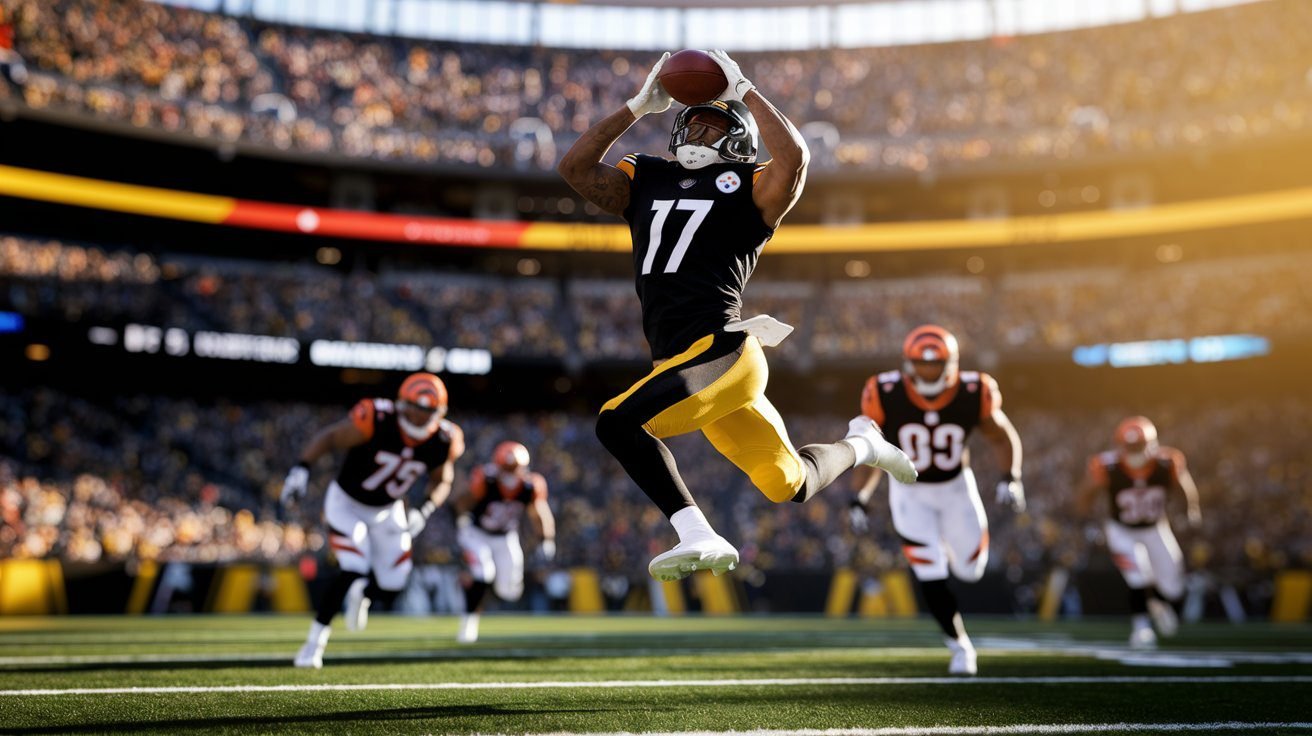
In the second half, Najee Harris continued to dominate on the ground, while Minkah Fitzpatrick made a crucial interception that set up a Steelers’ field goal. The Bengals failed to execute in the red zone, ultimately losing out on key scoring opportunities that could have shifted the game’s momentum. These missed chances proved fatal as the clock wound down. Pittsburgh’s ability to turn turnovers into points was the hallmark of their veteran leadership and clinical execution under pressure.
Detailed analysis of the final quarter reveals that the Steelers’ conditioning played a massive role. While the Bengals’ defenders looked fatigued, Najee Harris was still finding gaps and breaking tackles. The tactical decision to switch to a ball-control offense in the closing minutes effectively iced the game, leaving Joe Burrow with too little time to mount a meaningful comeback attempt.
Quarterback Performance: Burrow vs Pickett
Cincinnati Bengals Quarterback: Joe Burrow
| Player | Completions | Attempts | Yards | Touchdowns | Interceptions | Passer Rating |
|---|---|---|---|---|---|---|
| Joe Burrow | 24 | 36 | 250 | 2 | 1 | 95.3 |
Key Takeaways:
- Joe Burrow played well but was under heavy pressure throughout the game. While his 250 yards and 2 touchdowns were solid, 1 interception at a crucial moment cost the Bengals valuable points.
- Burrow showed his ability to make quick decisions and find his top targets, but was outplayed by the Steelers’ defense at times.
- The Bengals’ offensive line struggled to cope with the various blitz packages, often leaving Burrow exposed in the pocket.
Pittsburgh Steelers Quarterback: Kenny Pickett
| Player | Completions | Attempts | Yards | Touchdowns | Interceptions | Passer Rating |
|---|---|---|---|---|---|---|
| Kenny Pickett | 20 | 28 | 220 | 1 | 0 | 99.5 |
Key Takeaways:
- Kenny Pickett played with poise and efficiency, throwing for 220 yards and 1 touchdown. His no interception performance showed growth as a leader.
- Pickett’s decision-making and ability to connect with his playmakers helped the Steelers maintain a balanced offense.
- His mobility outside the pocket allowed him to extend plays, converting several key third downs that kept drives alive.
Ground Attack: Rushing Leaders and Performance
The rushing game was the clear differentiator in this matchup. Pittsburgh entered the game with a strategy to wear down the Bengals’ defensive front, and they executed it to perfection. By establishing the run early, they opened up the play-action passing lanes, making life much easier for their young quarterback. The physical nature of the Steelers’ running backs forced the Bengals to bring more defenders into the box, leaving their cornerbacks in one-on-one situations.
Pittsburgh Steelers Rushing Stats
| Player | Carries | Yards | Touchdowns | Yards Per Carry |
|---|---|---|---|---|
| Najee Harris | 20 | 90 | 1 | 4.5 |
| Kenny Pickett | 5 | 40 | 0 | 8.0 |
Key Takeaways:
- Najee Harris was a key contributor, rushing for 90 yards and adding 1 touchdown. His 4.5 yards per carry were instrumental in maintaining offensive balance.
- Kenny Pickett added 40 rushing yards, showing his dual-threat ability and providing another layer of versatility to the Steelers’ offense.
Cincinnati Bengals Rushing Stats
| Player | Carries | Yards | Touchdowns | Yards Per Carry |
|---|---|---|---|---|
| Joe Mixon | 12 | 40 | 0 | 3.3 |
| Samaje Perine | 5 | 20 | 0 | 4.0 |
Key Takeaways:
- Joe Mixon was contained by the Steelers’ defense, gaining just 40 yards on 12 carries.
- Samaje Perine showed promise, averaging 4.0 yards per carry, but the Bengals struggled to establish the run game.
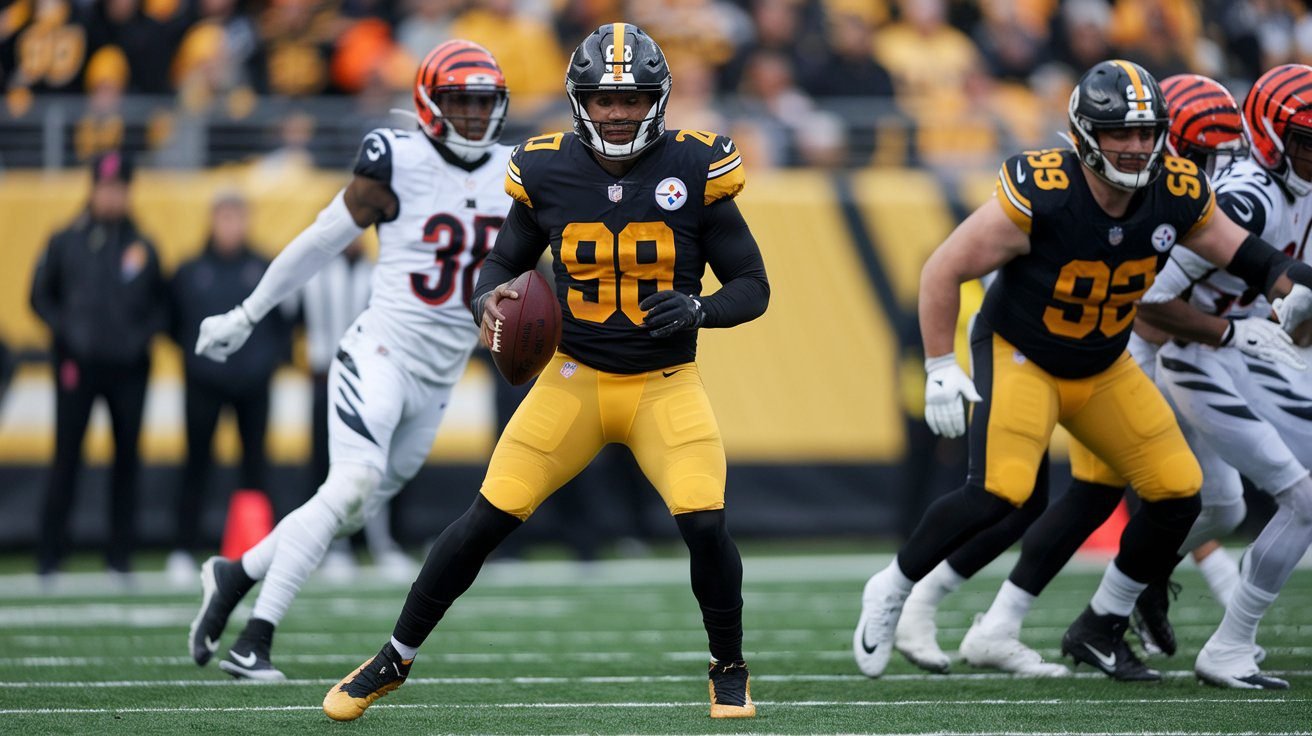
Pass Catchers: Receiving Stats and Leaders
In the modern NFL, the passing game is often the primary source of explosive plays. In this AFC North battle, the wide receivers and tight ends played pivotal roles in moving the chains and testing the limits of the opposing secondaries. The Bengals relied heavily on their star power, while the Steelers utilized a more distributed approach, involving their tight ends in critical short-yardage and red-zone situations.
Cincinnati Bengals Receiving Stats
| Player | Receptions | Yards | Touchdowns |
|---|---|---|---|
| Ja’Marr Chase | 6 | 85 | 1 |
| Tyler Boyd | 4 | 50 | 0 |
Key Takeaways:
- Ja’Marr Chase continues to be the Bengals’ top receiver, recording 85 yards and scoring a touchdown.
- Tyler Boyd provided solid contributions but was unable to make a significant impact against the Steelers’ defense.
Pittsburgh Steelers Receiving Stats
| Player | Receptions | Yards | Touchdowns |
|---|---|---|---|
| George Pickens | 5 | 70 | 0 |
| Pat Freiermuth | 4 | 45 | 1 |
Key Takeaways:
- George Pickens led the Steelers in receiving yards with 70, showcasing his playmaking ability.
- Pat Freiermuth was crucial in the red zone, making a key touchdown reception to help secure the Steelers’ lead.
Defensive Breakdown: Key Defensive Stats
Defensive prowess has always been the identity of the AFC North, and this game was no exception. The ability of the front seven to disrupt the quarterback’s timing was the central theme of the afternoon. Pittsburgh’s defense, in particular, lived up to its reputation as a “Steel Curtain,” making life miserable for Joe Burrow. The Bengals’ defense, while resilient, often found itself on the field for too long due to the offense’s inability to sustain drives.
Pittsburgh Steelers Defensive Stats
| Player | Tackles | Sacks | Forced Fumbles | Interceptions |
|---|---|---|---|---|
| T.J. Watt | 6 | 2 | 1 | 0 |
| Minkah Fitzpatrick | 4 | 0 | 0 | 1 |
Key Takeaways:
- T.J. Watt continues to be one of the NFL’s most dominant pass rushers, recording 2 sacks and 1 forced fumble.
- Minkah Fitzpatrick made a game-changing interception, solidifying his reputation as a key playmaker in the Steelers’ defense.
Cincinnati Bengals Defensive Stats
| Player | Tackles | Sacks | Forced Fumbles | Interceptions |
|---|---|---|---|---|
| Logan Wilson | 8 | 1 | 1 | 0 |
| Trey Hendrickson | 5 | 1 | 0 | 0 |
Key Takeaways:
- Logan Wilson and Trey Hendrickson both played solid games, recording sacks and contributing to the Bengals’ pass rush.
- The Bengals’ defense showed flashes of brilliance but couldn’t sustain consistent pressure on Kenny Pickett throughout the game.
Special Teams: Kicking and Punting Analysis
| Player | Field Goals Made | Longest Field Goal |
|---|---|---|
| Cameron Dicker | 2 | 48 yards |
| Brett Maher | 3 | 50 yards |
Key Takeaways:
- Brett Maher was flawless for the Cowboys, hitting 3 field goals, including a long 50-yarder.
- Cameron Dicker was effective for the Steelers, contributing with key field goals in critical moments.
Punting Stats:
| Player | Average Yards per Punt |
|---|---|
| Blake Gillikin | 46 |
| Brian Anger | 48 |
Key Takeaways:
- Brian Anger averaged 48 yards per punt, giving the Cowboys great field position after each kick.
- Blake Gillikin had an average of 46 yards per punt, providing similar performance for the Steelers.
Scoring Summary: Quarter by Quarter
| Quarter | Steelers Points | Bengals Points |
|---|---|---|
| 1st Quarter | 7 | 7 |
| 2nd Quarter | 10 | 7 |
| 3rd Quarter | 7 | 3 |
| 4th Quarter | 6 | 7 |
Critical Situations: Moments That Defined the Game
The game was decided in the high-pressure moments where stars are made. Analyzing the third-down conversion rates shows that Pittsburgh was far more efficient in extending drives when it mattered most. The red-zone defense of the Steelers was another massive factor; they forced Cincinnati to settle for field goals instead of touchdowns on several occasions.
- Steelers’ defense made key stops on third downs, preventing the Bengals from gaining any momentum.
- Minkah Fitzpatrick’s interception late in the game shifted the tide and sealed the victory for the Steelers.
- The Bengals’ failed fourth-down conversion in the fourth quarter was the final nail in the coffin for their comeback hopes.
Injury Report: Impact on Both Teams
Injuries are an unfortunate but inevitable part of the game. Both teams had to deal with key players leaving the field temporarily. The medical staffs were kept busy as the physical nature of the AFC North rivalry took its toll on the athletes. Fortunately, none of the injuries appeared to be season-ending, though they certainly impacted the tactical choices made by the coaches during the game.
- Cincinnati Bengals: Joe Mixon sustained a minor ankle injury but was able to return.
- Pittsburgh Steelers: T.J. Watt briefly left with a groin issue but returned and made crucial plays.
Historical Context: Steelers-Bengals Rivalry
This game continued the storied rivalry between the Steelers and Bengals, with the Steelers maintaining a slight edge in the head-to-head series. Their dominant defense and offensive balance once again proved to be a potent combination. Historically, these matchups have been characterized by physical toughness and defensive battles. This latest chapter adds another interesting layer to a rivalry that spans decades and involves numerous Hall of Fame players and legendary coaches.
Moving Forward: What’s Next for Both Teams?
Both teams have strengths to build on, but they must refine their offensive lines and turnover situations. The Steelers will look to improve their passing game and continue their dominance in rushing, while the Bengals will focus on fixing their defensive lapses and improving their rushing attack before Week 1. As the playoff picture begins to clear, both teams remain in the hunt, but the road ahead is challenging given the strength of the AFC North. Every remaining game will be treated as a must-win situation.
Final Thought: A Clash That Defines the Future of the AFC North
The Pittsburgh Steelers vs Cincinnati Bengals game was more than just a regular season contest; it was a statement of intent from both teams in their quest for AFC North supremacy. The Steelers’ solid defense, led by T.J. Watt and Minkah Fitzpatrick, proved to be the difference maker, with timely turnovers and sacks disrupting the Bengals’ offensive rhythm. On the other hand, Kenny Pickett’s steady performance and Najee Harris’ hard running kept the Steelers’ offense in control, while Pat Freiermuth’s red zone presence showed the growing chemistry between him and Pickett.
For the Bengals, it was a game of missed opportunities. While Joe Burrow remained sharp, Ja’Marr Chase was a constant deep threat, the Bengals couldn’t capitalize on critical moments, especially when they failed to convert on third downs and in the red zone. Their defensive lapses, particularly with Micah Parsons’ relentless pressure, left them scrambling for answers. The loss is a tough pill to swallow, but it provides valuable lessons for a team that has Super Bowl aspirations.
As the season progresses, both teams have clear paths to success, but this game serves as a reminder of how small mistakes can ultimately decide big games. Both squads must build upon their strengths and address weaknesses to stay competitive in the AFC North. The rivalry remains one of the most intense in professional sports, and fans are already looking forward to the rematch.
FAQs About Pittsburgh Steelers vs Cincinnati Bengals Match Player Stats
Q1: Who was the standout player in the Steelers vs Bengals game?
Micah Parsons was the standout defensive player for the Cowboys, recording 2 sacks and 9 tackles. For the Steelers, Pat Freiermuth made a critical touchdown catch in the red zone.
Q2: How did Joe Burrow perform in the game?
Joe Burrow threw for 250 yards and 2 touchdowns but struggled with one interception, largely due to Steelers’ defensive pressure.
Q3: What was the impact of Najee Harris in this game?
Najee Harris had a standout game, rushing for 90 yards and 1 touchdown, maintaining 4.5 yards per carry and controlling the Steelers’ offensive tempo.
Q4: Did Kenny Pickett play well in this matchup?
Kenny Pickett had a solid game with 220 yards, 1 touchdown, and no interceptions, showing poise under pressure and leading the team to victory.
Q5: What were the key moments in the game that turned the tide?
The Steelers’ defense made pivotal stops, including Micah Parsons’ sack on Burrow and a critical turnover in the second quarter. Additionally, Najee Harris’ touchdown solidified their control.
About the Author